
That $89 flight can become a $160 flight faster than you think. A bag fee, seat charge, inconvenient airport, or bad booking window can erase the deal before you even reach the gate.
Fall can still be a smart time to travel, but the useful question is not simply, “Are flights cheaper after Labor Day?” It is: Is this particular fare good enough to book now, or is waiting the smarter move?
Quick call: For U.S. domestic economy trips, start watching early but pay close attention once you are roughly 15 to 30 days from departure. For international trips, do not treat one universal booking window as a guarantee. Compare your route, watch the price trend, and book when the fare is genuinely strong for that itinerary.
BOOK NOW: When the price is already telling you not to wait
Expedia’s 2026 U.S. flight data found that the lowest average domestic economy fares were booked 15 to 30 days before departure. Its broader 2026 analysis also found October and November among the months with the most flight deals available in its U.S. Flight Deals data.
That does not mean every flight will drop on day 30. It means you should stop relying on the old idea that buying as early as possible automatically gets the lowest fare.
Book now when: your dates are fixed, the itinerary is convenient, the total price fits your budget, and a route-specific price tool shows that the fare is lower than usual or unlikely to drop.
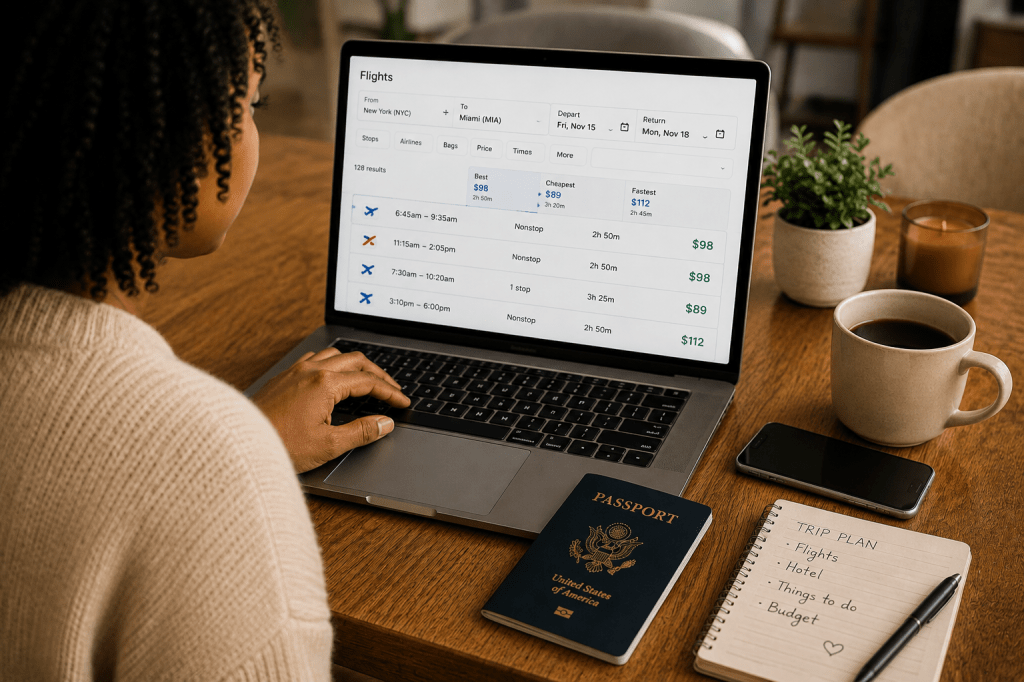
Google Flights can show signals such as “Prices are less than usual” and, when its prediction has high confidence, that prices are unlikely to drop before departure. Those route-specific signals are more useful than blindly following a generic “best day to book” rule.
See how Google Flights identifies lower fares and booking signals.
WAIT: When patience may still save you money
If your domestic trip is still several months away and the current fare looks high for the route, you may have room to watch instead of panic-buying. Expedia’s 2026 U.S. data found domestic economy fares were cheapest on average 15 to 30 days out compared with booking more than six months ahead.
Waiting makes more sense when your dates are flexible, several flights still have good schedules, and you can tolerate the risk that the fare moves the other direction.
Do not wait just because you hope for a dramatic price crash. If you are traveling for a wedding, school break, major event, or another date you cannot move, certainty may be worth more than chasing the absolute lowest possible fare.
WATCH: October and November deserve attention
For U.S. travelers, Expedia says July, October, and November produced the most deals in a year of its Flight Deals data. That makes fall worth watching, especially if you have flexibility on destination or travel dates.
The advantage is not simply “fall equals cheap.” Demand changes by route. A quiet Tuesday to one city can price very differently from a Sunday flight tied to a holiday weekend or major event.
The day you fly can matter more than the day you click Buy
Expedia’s 2026 domestic snapshot found that Tuesday was the cheapest day to fly domestically on average, with fares averaging 14% less than Sunday departures. Across its broader U.S. data, Friday was the cheapest day to book, but the reported booking-day difference was only about 3%.
That distinction matters. Moving your trip by a day can sometimes have more impact than waiting until a magical weekday to press the purchase button.
Useful Side move: Before booking, compare the same route one day earlier and one day later. A small date change can reveal a much better fare without changing the trip itself.
The $89 trap: compare the total trip cost, not the headline fare
A low base fare is designed to get your attention. Your wallet cares about the number you actually pay.
- Carry-on or checked-bag fees
- Seat-selection fees
- Change or cancellation restrictions
- Airport transportation costs
- A long layover that adds meals, parking, or even a hotel
- Basic economy restrictions that do not fit how you travel
U.S. airline rules require disclosures around baggage and other optional-service fees, but you still need to compare what is included in each fare. A ticket that costs $25 more upfront can be the cheaper choice after bags and seats are added.
Before you choose a fare because you plan to pack light, check our 2026 carry-on vs. personal item guide. The difference can change what your flight actually costs.
Domestic vs. international: do not use the same rule
Expedia’s U.S. 2026 analysis found a 15-to-30-day sweet spot on average for domestic economy. Its international data showed strong average savings closer to departure as well, including a 31-to-45-day window that saved an average of $190 compared with booking more than six months ahead.
But international trips have more variables: destination seasonality, passport and visa planning, limited nonstop options, holiday demand, and a much bigger downside if the convenient flight disappears. Treat those averages as a comparison tool, not permission to wait until the last minute.
The 5-minute test before you book a fall flight
- Check the price trend. Is this fare low, typical, or high for the route?
- Move the dates. Compare at least one day earlier and later.
- Add the real extras. Bags, seats, airport transfers, and restrictions count.
- Compare the itinerary. A cheaper ticket with an eight-hour layover is not automatically a better deal.
- Decide what waiting could cost. If your dates are fixed and the current fare is already strong, saving another $20 may not be worth losing the flight you actually want.
Before you hit Buy
Ask one question: Would I still call this a good deal after I add everything I actually need?
If yes, and the timing and itinerary work, do not lose a genuinely good flight while waiting for a perfect one.
Sources and methodology
This guide uses Expedia’s 2026 Air Hacks data for U.S. travelers, Google Flights guidance on fare and booking signals, and current U.S. airline fee disclosure guidance. Airfare changes constantly and averages cannot predict the exact future price of an individual flight.
Expedia 2026 Air Hacks · Expedia U.S. 2026 flight savings snapshot · Google Flights fare guidance · U.S. Department of Transportation 2026 airline ancillary-fee disclosure rule
 The Useful Side